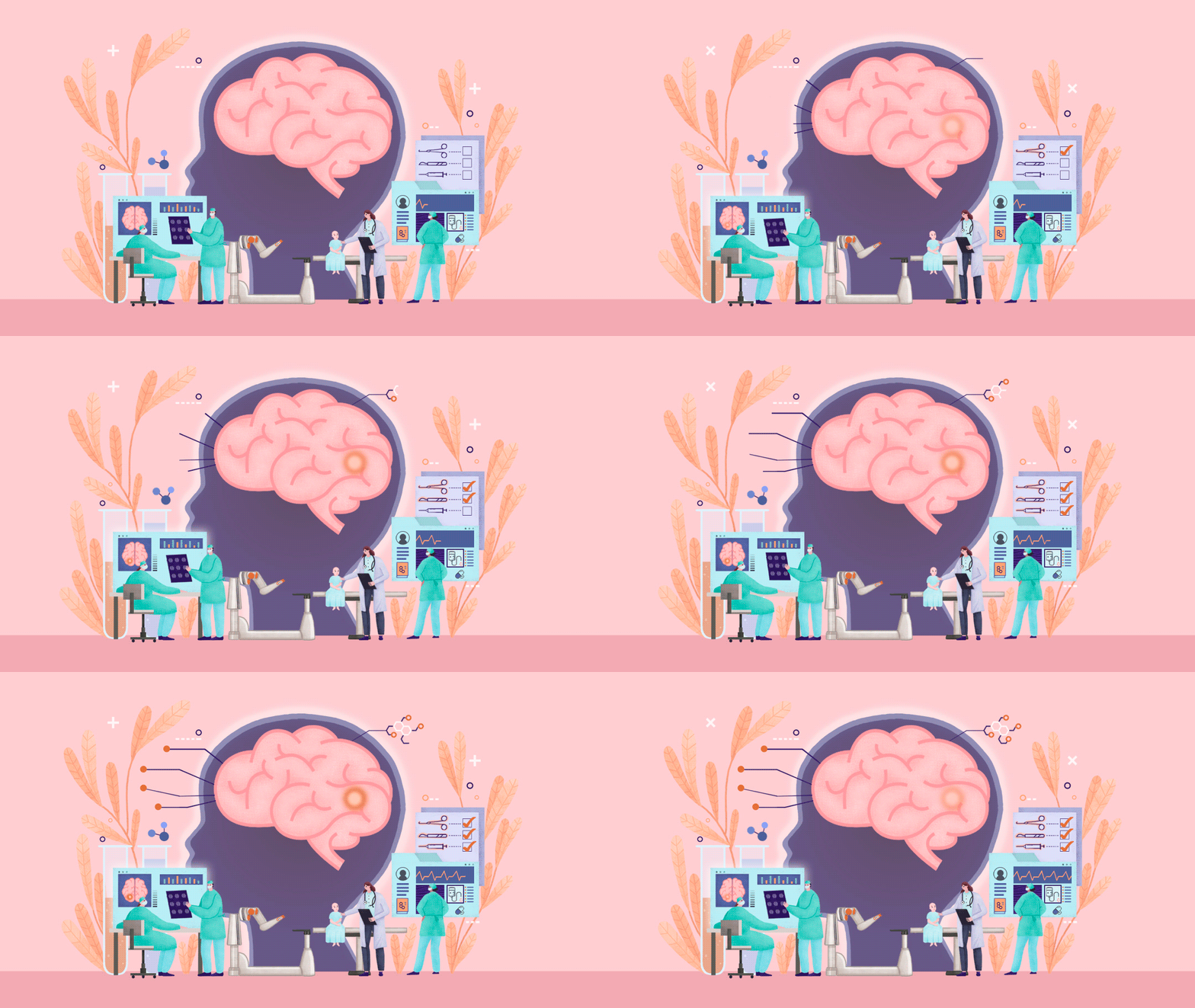
Full-text search Fulltext search 290 Resultate Negative emissions: Major breakthrough or empty promise? It would be necessary to extract CO₂ from the atmosphere on a massive scale. There are already ideas and pilot projects that aim to achieve this. However, in order to make a real contribution to a neutral carbon footprint, the scale would have to be increased by several orders of magnitude. Robots revolutionize neurosurgery Robots were intended to advance surgery to the next level. Instead, they fell into disrepute as a result of medical errors and high costs. To date, brain surgery is the field where the technology can best play to its strengths. The robotic assistants increase the precision and efficiency of delicate procedures. Stefan Jermann Initiator and founder of Naratek. Has been moving in the field of communication and storytelling for over 20 years. Strong affinity for tech topics, urban transformations and how people will live and move in cities in the future. Swiss patch warns of leaks in the stomach after operations A patch developed by Swiss researchers provides early warning of leaks at sutures in the gastrointestinal tract. The novel patch should significantly reduce the risk of life-threatening complications after abdominal surgery. AI to prevent wildlife accidents Artificial intelligence (AI) could in future prevent wildlife accidents, which are particularly frequent in autumn. A project by Austrian researchers is testing a risk assessment of routes by drones. University of Zurich teaches drones tricks Thanks to a navigation algorithm, drones are learning to autonomously perform acrobatic maneuvers. Using simulations, the autonomous aircraft are trained to become faster, more agile, and more efficient. Computers powering self-driving cars could emit vast amounts of CO2 Computers powering self-driving cars could be a big contributor to global carbon emissions, according to MIT. Electricity from chicken feathers Researchers want to use chicken feathers to produce green electricity. They use the keratin in chicken feathers to replace highly toxic chemicals in fuel cells. Changing shapes and materials using a 3D printer Empa researchers have used a 3D printer to produce metal parts that are divided into surfaces with different properties. Among other things, they hope to apply this technology to improve the efficiency of electric motors. German researchers develop skin for robots The aim of this is to enable robots to perceive their surroundings more effectively and even to balance on one leg. For the very first time, researchers at the Technical University of Munich (TUM) in Germany report that they have fully equipped a human-sized robot with an artificial skin.